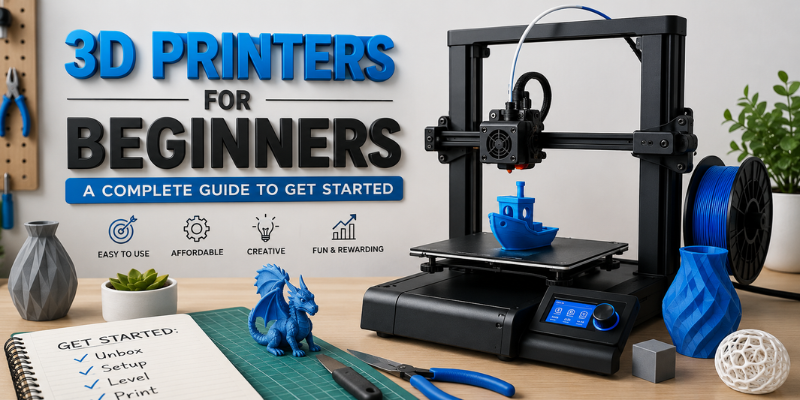

3D printers for beginners have made it easier than ever to bring creative ideas to life without requiring advanced technical knowledge. Whether you want to create home décor, repair broken items, build prototypes, or explore a new hobby, a beginner-friendly 3D printer is an excellent investment. Modern entry-level printers are affordable, easy to assemble, and packed with smart features that simplify the printing process. This guide will help you understand everything you need to know before buying your first 3D printer.
Why 3D Printers Are Perfect for Beginners
The popularity of 3D printing has grown rapidly over the last few years. What was once limited to engineers and manufacturers is now accessible to students, hobbyists, teachers, and small business owners.
Today’s beginner-friendly printers offer:
- Easy setup and calibration
- Affordable pricing
- User-friendly software
- Reliable print quality
- Large online communities for support
These improvements make learning 3D printing much less intimidating than it used to be.
Understanding How 3D Printing Works
A 3D printer creates objects by depositing thin layers of melted material one layer at a time until the model is complete. Most beginner printers use FDM (Fused Deposition Modeling) technology, which melts plastic filament through a heated nozzle.
The basic printing process includes:
- Designing or downloading a 3D model
- Slicing the model using slicing software
- Sending the file to the printer
- Printing the object layer by layer
- Removing supports and performing basic finishing
This simple workflow makes FDM printers ideal for first-time users.
Features to Look for in 3D Printers for Beginners
Choosing your first printer can feel overwhelming because of the many options available. Instead of focusing only on price, pay attention to features that improve ease of use.
Automatic Bed Leveling
Automatic leveling saves time and reduces printing errors. It ensures the printer’s build plate is correctly aligned before each print.
Print Volume
A larger build area allows you to print bigger models without splitting them into multiple parts.
Quiet Operation
Modern printers use silent stepper drivers that significantly reduce printing noise, making them suitable for home offices or bedrooms.
Safety Features
Look for features such as:
- Thermal runaway protection
- Power-loss recovery
- Filament runout sensor
- Enclosed electronics
These features improve both safety and convenience.
Easy Maintenance
Beginners should choose printers with replaceable nozzles, accessible components, and clear maintenance guides.
Best Filaments for Beginners
The material you use affects print quality and ease of printing.
PLA
PLA is the most beginner-friendly filament because it:
- Prints easily
- Produces minimal warping
- Requires lower temperatures
- Is environmentally friendlier than many plastics
PETG
PETG offers better durability while remaining relatively easy to print.
TPU
Flexible TPU is great for phone cases and soft parts but requires more experience.
Most beginners should start with PLA before experimenting with other materials.
Common Mistakes Beginners Should Avoid
Learning from common mistakes can save both time and filament.
Ignoring Bed Leveling
Poor bed leveling is one of the biggest reasons for failed prints.
Using Low-Quality Filament
Cheap filament often contains impurities that clog the nozzle and reduce print quality.
Printing Too Fast
Slower printing speeds generally produce better results for new users.
Skipping Maintenance
Regular cleaning of the nozzle and build plate keeps the printer performing at its best.
Tips for Getting Better Print Quality
Improving print quality doesn’t always require expensive upgrades.
Here are some simple tips:
- Keep the print bed clean.
- Store filament in a dry place.
- Use recommended print temperatures.
- Update firmware when available.
- Perform regular calibration.
- Start with small projects.
- Learn slicing software settings gradually.
Consistency is more important than speed when learning.
Is a Beginner 3D Printer Worth Buying?
Absolutely. Beginner printers are now more reliable, affordable, and capable than ever before. They allow users to create useful household items, educational models, gaming accessories, replacement parts, gifts, and even small business products.
Besides creativity, learning 3D printing develops valuable skills such as problem-solving, design thinking, and basic engineering concepts.
Frequently Asked Questions
1. What is the best type of 3D printer for beginners?
FDM printers are the best choice because they are affordable, easy to use, and have a large support community.
2. How much should beginners spend on a 3D printer?
Most quality beginner models cost between $200 and $500, offering excellent features and reliable performance.
3. Which filament should beginners use?
PLA filament is the best option because it prints easily, produces high-quality results, and requires minimal maintenance.
4. Are 3D printers difficult to learn?
Not anymore. Modern beginner printers include automatic features, simple software, and extensive online tutorials that make learning much easier.
5. Can beginners make money with a 3D printer?
Yes. Many people sell custom products, prototypes, replacement parts, home décor, toys, and personalized gifts using entry-level 3D printers.
Conclusion
Choosing the right 3D printers for beginners doesn’t have to be difficult. Focus on ease of use, safety features, reliable print quality, and strong community support rather than simply buying the cheapest option. With patience and regular practice, you’ll quickly gain confidence and create impressive projects. Investing in a beginner-friendly 3D printer is a rewarding step into the exciting world of digital manufacturing and creativity.
Stay in touch to get more updates & alerts on techtrickstimes.com ! Thank you