
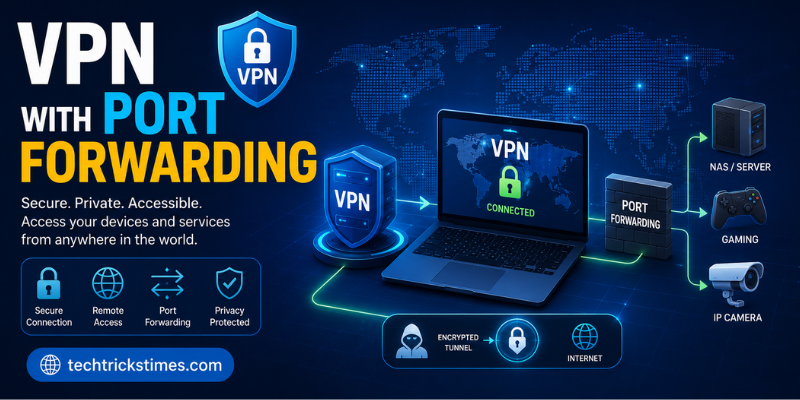

In today’s digital world, online privacy is more important than ever. A VPN with port forwarding offers an extra layer of flexibility for users who need secure remote access, better peer-to-peer connections, or smoother online gaming. While many VPN services focus only on privacy, port forwarding can significantly improve connectivity for specific applications without compromising your overall security when used correctly.
Whether you’re a gamer, a remote worker, or someone who frequently uses file-sharing applications, understanding how VPN port forwarding works can help you choose the right VPN service and maximize its benefits.
What Is a VPN with Port Forwarding?
A VPN (Virtual Private Network) encrypts your internet traffic and hides your IP address, protecting your online identity from hackers, ISPs, and trackers.
Port forwarding is an advanced networking feature that allows specific incoming internet traffic to reach your device through a designated port. When combined with a VPN, it enables secure access to services running on your computer or network while maintaining the privacy advantages of the VPN connection.
Simply put, a VPN with port forwarding lets trusted external devices communicate with your system through selected ports while your internet traffic remains encrypted.
How Does VPN Port Forwarding Work?
Every internet-connected device uses ports to send and receive different types of data. Normally, VPN servers block unsolicited incoming connections for security reasons.
When port forwarding is enabled:
- The VPN provider opens a specific port.
- Incoming requests on that port are forwarded to your device.
- Only traffic using the assigned port reaches your application.
- All other traffic continues to be protected by the VPN’s encryption.
This creates a secure tunnel for approved services while keeping the rest of your online activity private.
Benefits of Using a VPN with Port Forwarding
Better Torrent Performance
Many peer-to-peer applications work more efficiently when incoming connections are allowed. Port forwarding can increase the number of peers you connect with, leading to faster download and upload speeds.
Improved Online Gaming
Gamers often experience fewer connection issues and more stable multiplayer sessions when required ports are properly forwarded through a VPN.
Secure Remote Access
If you manage a home server, NAS device, or remote desktop, port forwarding allows you to access these services securely from anywhere without exposing your real IP address.
Hosting Private Services
Developers and IT professionals can safely host testing environments, game servers, or personal applications through selected VPN ports.
Greater Network Flexibility
Advanced users gain more control over how external devices communicate with their systems while maintaining encrypted internet traffic.
Is VPN Port Forwarding Safe?
Port forwarding is generally safe when configured properly. However, opening unnecessary ports may increase security risks.
Follow these best practices:
- Open only the ports you actually need.
- Use strong passwords for hosted services.
- Keep your software updated.
- Enable firewalls whenever possible.
- Close unused forwarded ports.
A properly configured VPN still provides strong encryption and protects most of your online activities.
Who Should Use a VPN with Port Forwarding?
A VPN with port forwarding is ideal for:
- Remote workers
- Gamers
- Torrent users
- Developers
- Home server administrators
- IT professionals
- Advanced networking enthusiasts
If your primary goal is simply browsing privately or streaming content, you may not need this feature.
Choosing the Best VPN with Port Forwarding
When selecting a VPN provider, consider these important factors:
Strong Security
Look for AES-256 encryption, DNS leak protection, and a strict no-logs policy.
High-Speed Servers
Fast servers reduce latency and improve overall performance.
Easy Port Management
The provider should allow quick configuration of forwarded ports without complicated networking knowledge.
Reliable Customer Support
Technical assistance becomes valuable when configuring advanced networking features.
Cross-Platform Compatibility
Ensure the VPN works across Windows, macOS, Linux, Android, and other devices you regularly use.
Common Uses of VPN Port Forwarding
Port forwarding is commonly used for:
- Remote desktop access
- Home media servers
- Game servers
- CCTV monitoring
- File sharing
- Development environments
- Secure personal cloud storage
These applications benefit from controlled incoming connections while remaining protected by VPN encryption.
Common Mistakes to Avoid
Many users unintentionally reduce their security by making simple mistakes.
Avoid:
- Opening multiple unnecessary ports.
- Ignoring software updates.
- Using weak login credentials.
- Disabling firewall protection.
- Leaving unused forwarded ports active.
Following good security practices helps maintain both privacy and performance.
Frequently Asked Questions
What is a VPN with port forwarding?
A VPN with port forwarding allows selected incoming internet traffic to reach your device through secure VPN servers, improving connectivity for supported applications.
Does port forwarding make a VPN faster?
It doesn’t directly increase internet speed, but it can improve peer-to-peer connections, online gaming performance, and remote access reliability.
Is VPN port forwarding good for gaming?
Yes. Many online games benefit from improved connectivity, reduced NAT issues, and more stable multiplayer sessions.
Can I use port forwarding for remote desktop access?
Yes. Many professionals use VPN port forwarding to securely access computers, servers, and home networks from different locations.
Should everyone use VPN port forwarding?
No. Most casual users only need a standard VPN. Port forwarding is mainly useful for advanced networking tasks, hosting services, gaming, and secure remote access.
Conclusion
A VPN with port forwarding offers much more than online privacy. It provides secure remote access, better peer-to-peer connectivity, improved gaming experiences, and greater networking flexibility. While it requires careful configuration, the benefits can be significant for power users and professionals. Choosing a reliable VPN provider and following good security practices will help you enjoy the advantages of port forwarding without sacrificing your online privacy.
Stay in touch to get more updates & alerts on techtrickstimes.com ! Thank you